

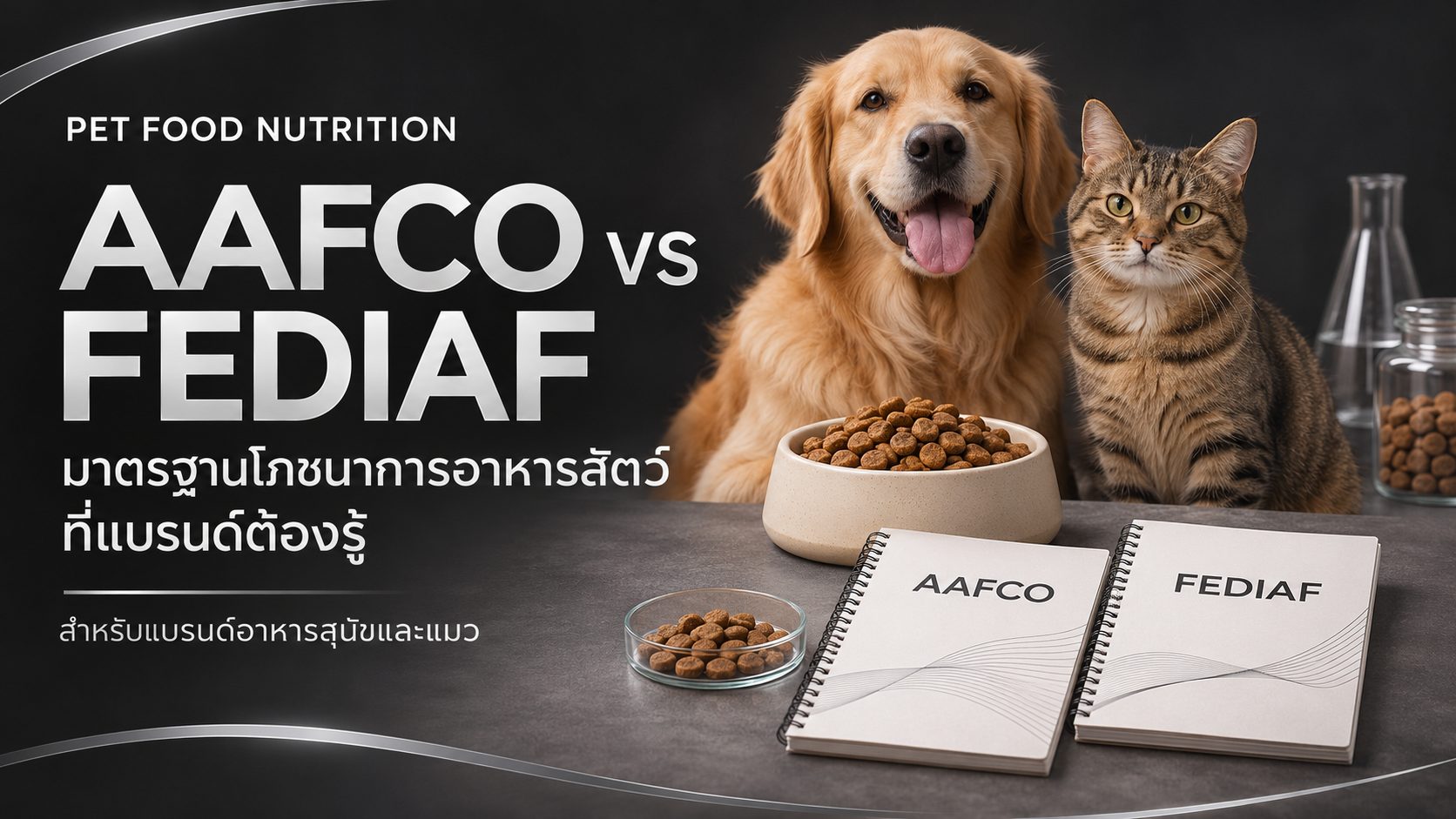
AAFCO vs FEDIAF: A Guide for Pet Food Brands
Understand AAFCO and FEDIAF, nutritional adequacy, formulation evidence, and key questions to ask before developing an OEM/ODM pet food brand.
AAFCO vs FEDIAF: Pet Food Nutrition Standards Every Brand Should Understand
When developing a dog or cat food brand, you may encounter phrases such as “formulated to meet AAFCO nutrient profiles” or “developed with reference to FEDIAF guidelines.” What do these mean, and how should they influence product development?
AAFCO and FEDIAF provide important frameworks for assessing pet food nutrition. Understanding their roles helps brand owners define a product brief, review evidence from manufacturers, and communicate nutritional information accurately.
What Is AAFCO?
AAFCO stands for the Association of American Feed Control Officials. It develops model requirements and guidance for animal feed in the United States, including Dog and Cat Food Nutrient Profiles.
AAFCO does not approve or certify individual pet food products. Regulatory authority rests with the relevant government agencies. Brands should therefore avoid suggesting that AAFCO itself has tested and approved their product. Source: AAFCO Resources for Startups
What Is FEDIAF?
FEDIAF, the European Pet Food Industry Federation, publishes nutritional guidelines for complete and complementary dog and cat food.
The guidelines support formulation and nutritional assessment using scientific evidence and expert review. They must be considered alongside the legal requirements of the market where the product will be sold.
When the source information was checked, FEDIAF’s official publication page offered the 2025 guidelines. Verify the current edition before developing or reviewing a formula. Source: FEDIAF Nutritional Guidelines
How Do AAFCO and FEDIAF Compare?
TopicAAFCOFEDIAFPrimary market contextUnited StatesEuropeKey nutritional referencesDog and Cat Food Nutrient Profiles and feeding protocolsNutritional Guidelines for Complete and Complementary Pet Food for Cats and DogsTarget animalsDogs and cats, with relevant life-stage criteriaDogs and cats, with life-stage criteria and detailed energy-intake assumptionsPractical useAssessing nutritional adequacy and supporting associated statements within its model frameworkGuiding formulation and assessment through recommended nutrient levels and relevant upper limitsAdditional checksApplicable destination-market regulationsApplicable destination-market regulationsThese are different reference frameworks, and their tables, conditions, and supporting notes must be read carefully before use. Sources: AAFCO, FEDIAF Nutritional Guidelines 2025
Formulation and Feeding Trials Are Different Forms of Evidence
Two important routes for substantiating a “complete and balanced” statement within the AAFCO framework are meeting the applicable nutrient profile or using feeding tests conducted according to AAFCO procedures.
These routes rely on different evidence. A formula developed to meet a nutrient profile has not necessarily undergone a feeding trial. Ask the manufacturer which evidence supports the proposed nutritional adequacy statement. Source: FDA, “Complete and Balanced” Pet Food
Why Protein Percentage Alone Is Not Enough
Two foods with similar protein percentages can differ in other important nutritional characteristics. A complete diet must be assessed across the relevant nutrients for its target species and life stage.
Units and calculation basis also matter. Label values may be expressed on an as-fed basis, including moisture, while reference tables may use dry matter. Convert values to a comparable basis before drawing conclusions. Source: FDA
FEDIAF also provides nutrient tables relative to energy, such as per 1,000 kilocalories. Its guidance distinguishes nutritional upper limits from applicable legal limits. These details should be interpreted with the relevant table notes and conditions. Source: FEDIAF Nutritional Guidelines 2025
Which Framework Should a Brand Use?
Start with the destination market, species, life stage, and product type, then agree on the reference framework with the formulation team.
For a US project, consider AAFCO references alongside the requirements of the relevant authorities. For Europe, FEDIAF is an important formulation reference, but destination-market rules still require separate review.
For products sold in Thailand, using AAFCO or FEDIAF references does not replace local registration and licensing requirements. Plan nutritional development and regulatory preparation together, using the DLD’s current forms and guidance.
The choice should reflect the project. It does not establish that one framework is universally better for every product.
Questions to Ask an OEM/ODM Manufacturer
Before starting development, ask:
- Which document edition and life-stage criteria does the formula reference?
- Is the product intended as a complete diet or a complementary food?
- Is there a nutrient comparison against the selected criteria?
- Which values are calculated, and which are supported by finished-product analysis?
- If feeding trials are mentioned, which reports support the proposed product?
- Who reviews nutritional information and label wording after formula or ingredient changes?
These questions help establish the scope of work and the evidence your brand should receive.
Communicating Nutrition Accurately
Website and packaging statements should match the evidence available. Explain the reference used, target animals, and assessment method accurately.
Review phrases such as “approved” or “certified” carefully, since readers may interpret them as individual product approval by the named organization. Clear, substantiated wording supports long-term brand credibility.
Build a Nutritional Foundation with Petpal
AAFCO and FEDIAF provide a structured basis for discussions with a manufacturer, from defining the target animal to reviewing formulation and product information.
Interested in developing dry dog or cat food through OEM/ODM manufacturing? Contact Petpal with your target species, life stage, and intended markets to discuss your project.
Source information checked for the Thai article on 17 November 2026. Use current reference editions and applicable market requirements.